New International Consensus Redefines Heart Failure Diagnosis, Putting Filling Pressure and Primary Care at the Center
PR Newswire
PASADENA, Calif., July 28, 2026
2026 AHA/ACC/ESC/WHF definition recognizes non-invasive measurement of elevated filling pressure as diagnostic evidence, sharpening the case for earlier detection before symptoms appear
PASADENA, Calif., July 28, 2026 /PRNewswire/ — A newly published international consensus is set to reshape how heart failure is diagnosed, formally recognizing non-invasive measurement of elevated cardiac filling pressure as evidence sufficient to confirm the disease, including in patients whose symptoms or biomarkers would otherwise leave it undetected.
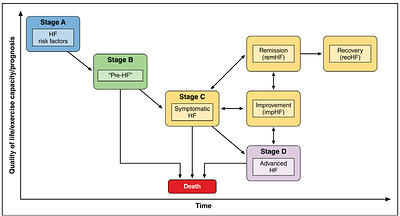
The Second Universal Definition of Heart Failure (2026), issued jointly by the American Heart Association, American College of Cardiology, European Society of Cardiology, and World Heart Federation, places elevated filling pressure at the center of the diagnostic criteria for heart failure across every stage of the disease. The document also renames Stage B as “pre-HF,” a signal, specialists say, of a broader shift toward identifying cardiac dysfunction early, before it becomes symptomatic and harder to treat.
A Shift that Lands Squarely on Primary Care
The consensus authors point to a screening gap that persists in general practice, where early signs of heart failure are often mistaken for deconditioning or normal aging, and cite trial evidence supporting structured screening to detect the disease sooner. The stakes are significant: recent data show the median time to diagnosis among patients already showing early signs of heart failure has stretched to nearly three years.¹ The new definition also anticipates a growing role for non-invasive tools capable of detecting cardiac dysfunction earlier than biomarker- or imaging-based approaches alone — a direction primary care will need infrastructure to support.
Two Features of the New Definition Stand Out Clinically
- First, it treats elevated intracardiac filling pressure as confirmatory evidence of heart failure even when natriuretic peptide levels are normal, addressing a well-documented blind spot in patients with heart failure with preserved ejection fraction (HFpEF), a substantial share of whom have normal BNP or NT-proBNP despite clear hemodynamic evidence of disease.
- Second, the definition’s emphasis on filling pressure echoes existing European Society of Cardiology guidance and the HFA-PEFF diagnostic framework, which already treat elevated left ventricular filling pressure as the hemodynamic reference standard for diagnosing HFpEF.²,³
Together, the two frameworks now point to the same physiological signal as central to diagnosis.
Emerging Technologies Answering the Call for Earlier Detection
The direction of the guidance aligns with a broader movement already underway in point-of-care cardiac diagnostics, including work by companies such as Ventric Health, whose Vivio® System uses physics-based analysis of cardiac waveforms to identify elevated left ventricular end-diastolic pressure (LVEDP) non-invasively, at the point of care, in under five minutes. In a recent multicenter study of 1,238 high-risk patients across 25 primary care sites, Vivio produced a conclusive result in 92.2% of patients and identified elevated LVEDP in 40.1% of those tested; to date, nearly 40,000 patients have been tested with the system.⁴
“Historically, the definitive evidence of heart failure, elevated filling pressure within the heart, could only be obtained through invasive catheterization, well outside the reach of a primary care visit,” said Keith D. Dawkins, M.D., Chairman of Ventric Health. “What’s notable about this consensus is that it doesn’t just reaffirm filling pressure as central to diagnosis, it opens the door to non-invasive measurement satisfying that same criterion. That has real implications for how, when, and where heart failure gets identified.”
“Guidance is only as useful as a health system’s ability to act on it,” said Sean Brady, CEO of Ventric Health. “Most of the patients this definition is describing are already sitting in a primary care exam room, often with symptoms nobody has connected to their heart yet. The practical question the field now has to answer is how to bring a filling-pressure measurement into that visit, rather than waiting for a cardiology referral or a hospitalization to make the diagnosis.”
About the Vivio® System
The Vivio System is an FDA-cleared, non-invasive technology that identifies elevated left ventricular end-diastolic pressure (LVEDP) using physics-based analysis of cardiac pressure and volume waveforms. Performed at the point of care in under five minutes, with no imaging, referral, or invasive procedure required, Vivio gives primary care teams a direct read on the filling pressure now recognized as central to diagnosing heart failure. Learn more at www.ventrichealth.com/vivio-system.
About Ventric Health
Ventric Health is a medical technology company dedicated to enabling the early detection of heart failure at the point of care. The Vivio® System is used by health systems, Medicare Accountable Care Organizations (ACOs), and primary care groups across the United States to identify hidden cardiovascular risk. Ventric Health is headquartered in Pasadena, California. Learn more at www.ventrichealth.com.
References:
1. Lawson CA, Ali MR, McCann GP, et al. Health inequalities and trends in heart failure diagnosis in primary care in England, 2000–21: a national retrospective cohort data-linkage study. Lancet Prim Care. 2025;1(6):100060. doi:10.1016/j.lanprc.2025.100060.
2. Pieske B, Tschöpe C, de Boer RA, et al. How to diagnose heart failure with preserved ejection fraction: the HFA-PEFF diagnostic algorithm: a consensus recommendation from the Heart Failure Association (HFA) of the European Society of Cardiology (ESC). Eur Heart J. 2019;40(40):3297–3317. doi:10.1093/eurheartj/ehz641.
3. McDonagh TA, Metra M, Adamo M, et al; ESC Scientific Document Group. 2021 ESC Guidelines for the diagnosis and treatment of acute and chronic heart failure. Eur Heart J. 2021;42(36):3599–3726. doi:10.1093/eurheartj/ehab368.
4. Cantu-Martinez O, Girard AA, Jin W, Rinderknecht D, Cheek T, Spertus JA. Noninvasive Screening for Elevated LVEDP and Health Status in Outpatients at Risk for Heart Failure. JACC: Advances. 2025;4(8):102002. doi:10.1016/j.jacadv.2025.102002.

 View original content to download multimedia:https://www.prnewswire.com/news-releases/new-international-consensus-redefines-heart-failure-diagnosis-putting-filling-pressure-and-primary-care-at-the-center-302835654.html
SOURCE Ventric Health