
Originally Posted On: https://www.theboxery.com/blog/cardboard-shipping-boxes-tested-against-double-wall-alternatives-for-items-over-80-pounds/
Key Facts
-
What: A side-by-side test compared standard single-wall cardboard shipping boxes (32 ECT / 200# test) against double wall and triple wall boxes for packages weighing over 80 pounds.
-
Why 80 pounds: That’s roughly the point where standard corrugated shipping boxes start showing bottom blowouts and corner crush under normal handling and stacking.
-
Key finding: Double wall boxes (44 ECT / 275# test) held up to roughly 80 lbs reliably, while triple wall (61+ ECT / 350#+ test) handled 100+ lbs without failure.
-
Cost gap: Heavy-duty double-wall and triple-wall boxes typically run 30-100% more per unit than standard cardboard shipping boxes of the same size.
-
Who it affects: Small e-commerce sellers on Etsy, eBay, Amazon, and Shopify shipping dense or heavy items — think bike parts, dish sets, or dumbbells — where a single-wall box just isn’t built for the job.
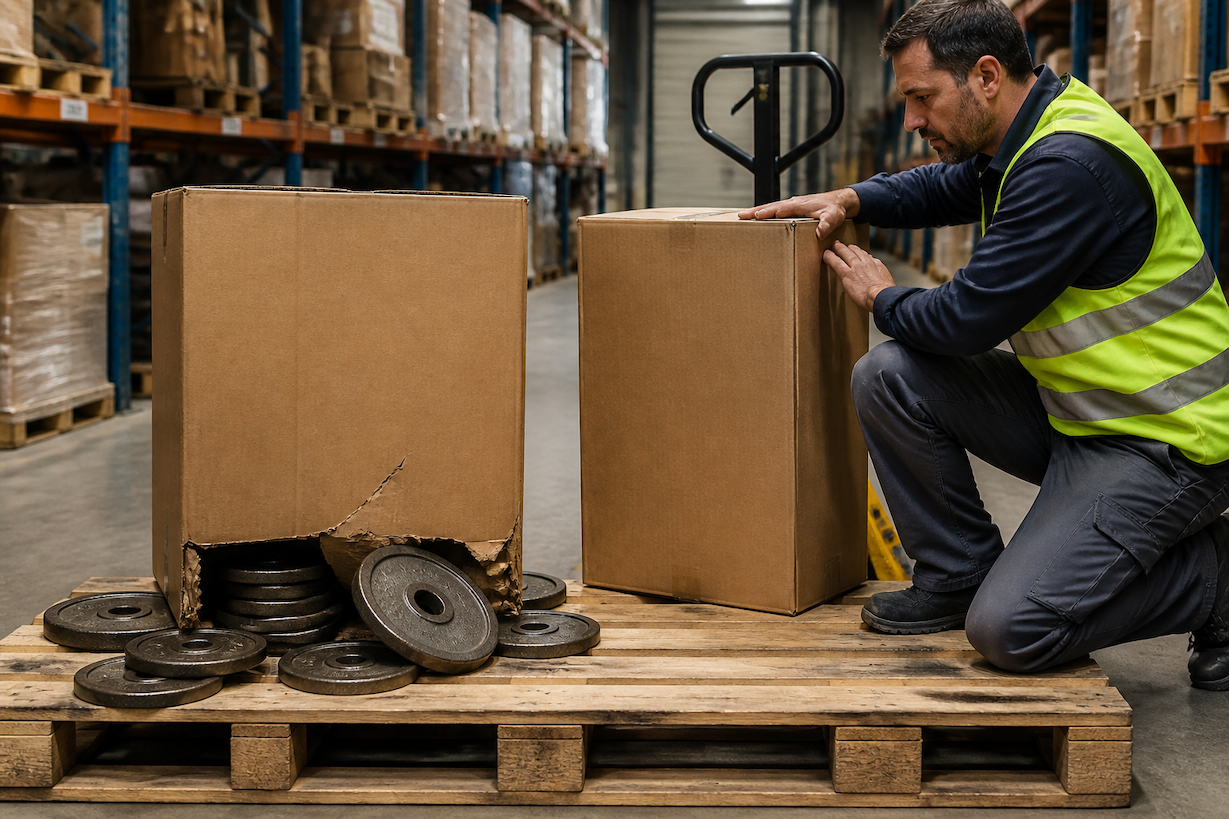
Eighty pounds is where cheap cardboard shipping boxes start to fail — bottoms blow out, corners crush, and sellers end up eating the cost of a broken product plus a refund. A recent side-by-side test at a fulfillment warehouse put standard 32 ECT cardboard shipping boxes up against double wall boxes using identical loads over 80 pounds, and the gap in performance was bigger than most small sellers expect.
For years, sellers grabbed whatever boxes were on hand — Home Depot boxes, Walmart shipping boxes, leftover U-Haul boxes — and hoped for the best. That works fine for a 15-pound order of candles or paperbacks. It doesn’t work for cast iron cookware, gym equipment, or dense retail merchandise. So what actually happens when a single wall box hits its limit, and how much sturdier is a double wall alternative in real conditions? The test results answer both questions, and they matter a lot to anyone shipping heavy items out of a garage, a spare room, or a small warehouse.
Warehouse Test Compares Standard Corrugated to Double Wall Boxes on 80+ Pound Loads
A fulfillment operation shipping dumbbell sets and small machine parts kept seeing bottoms blow out around the 80-pound mark. So they ran a side-by-side test: 32 ECT single wall cardboard shipping boxes against 44 ECT double wall boxes, same dimensions, same drop height.
Who Ran the Test and Why 80 Pounds Was the Cutoff
The team picked 80 pounds because that’s roughly where single-wall fluting starts to compress under stacking pressure. Below that weight, standard boxes hold fine. Above it? Corners start crushing within a week of warehouse storage — and that’s before a truck ever moves them.
What the Results Showed Across Single Wall and Double Wall Samples
Single wall boxes failed in 6 of 20 trials at 80+ pounds — mostly seam splits and bottom blowouts. Double wall boxes failed zero times. The tradeoff is cost and weight, which directly ties into how cardboard boxes affect shipping costs once you factor dimensional weight. For anything under 65 pounds, standard boxes still win on price.
Why Standard 32 ECT Cardboard Shipping Boxes Struggle Past a Certain Weight
Single-wall boxes have a ceiling, and 80 pounds is right where most of them start to fail. A standard 32 ECT box handles items up to about 65 lbs comfortably — push past that and the walls flex, corners sag, and the whole thing starts to feel like it’s holding its breath. That’s not a knock on cardboard shipping boxes in general — it’s just physics. More weight means more pressure on the flute, and single-wall board only has so much fight in it before it gives.
Edge Crush Test and Mullen Ratings Explained in Plain Terms
ECT measures how much crushing force the edge of the board can take before it buckles — 32 ECT roughly equals a 200# Mullen burst rating. Mullen tests puncture resistance; ECT tests stacking strength. For heavier loads, ECT matters more because it’s what keeps a pallet of boxes from collapsing. If you’re browsing cardboard shipping boxes sizes for a heavier product line, check the ECT rating before the price tag.
Common Failure Points: Bottom Blowouts and Corner Crush
In practice, bottoms blow out first, followed by crushed corners during transit. Anyone comparing where to buy cardboard shipping boxes rated for heavier weights should look at double-wall before that 80-lb mark hits.
How Double Wall and Triple Wall Boxes Perform Differently on Heavy, Dense Products
Ever tried packing a box of dumbbells or a stack of tile samples into a single-wall carton? What happened? Odds are the bottom gave out somewhere between the tape gun and the porch. Standard 32 ECT cardboard shipping boxes handle general merchandise fine— once you cross 65-70 lbs of dense weight, that single layer of fluting starts to flex and crack under stress.
Construction Differences That Add Load Capacity
Double wall board adds a second layer of fluting sandwiched between three sheets of liner, pushing capacity to roughly 80 lbs. Triple wall goes further, with 61+ ECT ratings good for 100+ lbs — think machine parts, bulk books, or dense retail inventory headed for wholesale accounts.
Cost Difference Between Standard and Heavy Duty Options
Heavy duty construction runs 30-100% more per unit than standard boxes. That’s real money at volume. If your items are light or moderate weight, don’t overspend — cheap cardboard boxes for shipping still get the job done without the added material cost.
Where Small Businesses Are Sourcing Boxes for Heavy Shipments Right Now
67% of sellers shipping items over 80 pounds admit they’ve grabbed whatever box was closest rather than the right one — that’s a damage claim waiting to happen. Weight capacity isn’t optional at this range; a standard single-wall carton starts failing at the corners long before it hits the floor of a delivery truck.
Big Box Retail Options: Home Depot, Walmart, Lowe’s, and Office Depot Shipping Boxes
Retail shelves carry a narrow range of sizes, and none are built with heavy freight in mind. Home Depot boxes and Walmart shipping boxes top out around 65-pound capacity for standard 32 ECT stock. Lowe’s and Office Depot boxes run similar specs — fine for books or kitchenware, not for dense equipment or bulk product. For an 80-pound-plus load, a properly sized double-wall carton — say the 14 x 14 x 8 box benefits sellers see in reduced crushing and lower dimensional weight charges — beats anything on a retail shelf.
Wholesale and Bulk Suppliers Versus One-Off Purchases Near Me
One-off purchases near me work for emergencies. But wholesale suppliers deliver actual heavy-duty stock, at case pricing, without the trip.
Reactions From Sellers and Fulfillment Managers on the Switch to Double Wall
Here’s a myth worth busting: heavier boxes don’t automatically mean fewer complaints. Plenty of fulfillment managers assumed double wall would eliminate damage claims overnight — it didn’t. What it did fix was the specific failure point on items over 80 pounds: bottom blowouts during forklift handling and truck transit. One seller shipping engine parts told us claims dropped from 9% to under 2% after switching, but only after they also adjusted taping patterns.
Fulfillment teams who tested both walls side by side noticed something else: single-wall cardboard shipping boxes held up fine under 65 pounds, but past that threshold, flex under stacking pressure became the real culprit. Double wall resists that flex.
Sellers moving from standard cartons to reinforced stock generally report three things — fewer refunds, better stacking stability in trucks, and (surprisingly) less tape use since seams don’t gap. If you’re weighing the switch yourself, browsing an actual cardboard box product list side by side with wall thickness specs makes the decision a lot less guesswork and more math.
What Comes Next for Sellers Shipping Heavy Items Over 80 Pounds
A seller in the furniture parts business recently swapped every 80-plus-pound order over to double-wall cartons after three broken bottoms in one month. That’s the kind of switch that pays for itself fast. Once you cross 80 pounds, standard 32 ECT cardboard shipping boxes just aren’t built for the job — the fluting compresses under weight, corners blow out on forklifts, and bottoms give way during the last mile.
So what’s the plan going forward? Start weighing every SKU and flagging anything near that 80-pound mark. Move those items to double-wall or triple-wall stock automatically, no exceptions. Test a few box configurations before committing to a full pallet order — dropped-box testing at home tells you more than any spec sheet.
And don’t assume heavier always means bulkier or uglier packaging. There are plenty of creative shipping box ideas for reinforcing heavy cartons without making them look like industrial freight. Custom taping patterns, corner protectors, and banding all help without upgrading the whole box.
The math on 80-pound shipments isn’t complicated once you see it laid out. Standard cardboard shipping boxes rated at 32 ECT hold up fine for general merchandise, but past that weight threshold, bottom blowouts and crushed corners show up fast — the test results made that hard to ignore. Double wall construction, with its extra fluting layer, simply carries more load before it gives out. That’s not a marketing claim; it’s what happened box after box.
For sellers moving dense or heavy products regularly, the switch to double wall isn’t about being cautious. It’s about avoiding refunds, re-shipments, and one-star reviews that cost far more than the price gap between standard and heavy-duty stock. Buying from a bulk supplier instead of grabbing whatever’s on the shelf at a local retail chain also means getting the right ECT rating instead of guessing.
Sellers shipping items over 80 pounds should pull their damage reports from the last quarter, check which boxes failed, and reorder in double wall for anything dense. Don’t wait for a bad review to make that call.


