
Key Takeaways
- Virginia homeowners face three termite threats: Eastern Subterranean termites are the dominant species, Formosan termites have been reported in coastal southeastern Virginia, and Drywood termites occasionally appear through infested furniture – each with distinct damage patterns requiring different treatment strategies.
- Termite repairs in Virginia can run upwards of $3,000, and damage is typically excluded from standard homeowners’ insurance policies.
- Mud tubes, hollow-sounding wood, discarded wings, and frass are early warning signs that should never be ignored – catching these early can mean the difference between a minor treatment and major structural repairs.
Termites are often called the “silent destroyers” for good reason. By the time most Virginia homeowners notice visible damage, colonies have been feeding for months – sometimes years. Understanding which species is active, how it damages wood, and what can actually stop it is the first step toward real protection, says Virginia-based Connor’s Pest Pros.
Virginia Termites Cost Homeowners Thousands – Often Before They Notice
Termite damage in Virginia is not a rare, worst-case scenario. Property owners across the state pay upwards of $3,000 to repair termite damage, with structural repairs climbing into the tens of thousands depending on the extent. Some homeowners have discovered significant hidden damage only after purchasing a property that received a clean inspection report – a scenario that underscores why pre-purchase termite evaluations matter.
What makes this worse is that standard homeowners’ insurance policies almost universally exclude termite damage. Across the United States, termites cause an estimated $5 billion in structural damage annually – and subterranean species alone account for roughly 80% of that total. Virginia sits in USDA termite infestation probability zones II and III, meaning the state experiences moderate-to-heavy termite pressure year-round. This is not a seasonal problem; it is a constant one.
3 Termite Species Threatening Virginia Homes
Eastern Subterranean: The Most Destructive Native Species
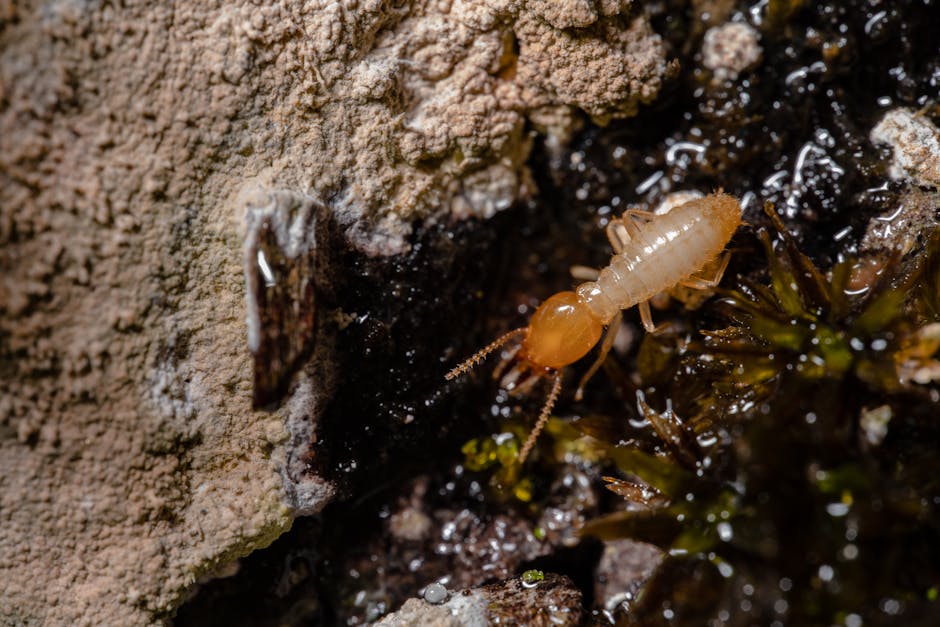
The Eastern Subterranean Termite (Reticulitermes flavipes) is the most common and economically significant termite species in Virginia. Colonies live underground and build distinctive mud tubes to reach above-ground wood while maintaining the humidity they need to survive. A mature colony can contain millions of individuals and consume approximately one foot of a 2×4 wooden beam in just six months. These termites swarm in spring, typically after rainfall when temperatures begin to rise.
Formosan: The “Super Termite” in Coastal Virginia
Formosan termites are an invasive species with reported activity in southeastern Virginia, particularly in coastal areas. A single Formosan colony can contain several million individuals and consume up to 13 ounces of wood per day – a feeding rate that produces significant structural damage in a fraction of the time native species require. One of their most dangerous traits is the ability to form aerial nests that do not require soil contact, as long as a moisture source is available. Their swarmers are yellowish-brown and larger than Eastern Subterranean termites, measuring roughly half an inch in length.
Drywood: Rare but Distinct in How They’re Found
Drywood termites are uncommon in Virginia and don’t represent an established population in the state. That said, they occasionally appear in southeastern coastal regions, most often introduced through infested furniture or decorative wood shipped from southern states. Unlike subterranean species, they require no soil contact and no external moisture source, allowing them to infest dry, sound wood directly. Colonies are small – rarely exceeding a few thousand members – but they are identified by a telltale sign: tiny hexagonal fecal pellets (frass) pushed out through kickout holes in the wood.
How Each Species Damages Wood Differently
Eastern Subterranean: Grain-Following Tunnels That Hollow Wood From Within
Eastern Subterranean termites consume the softer spring wood along the grain while leaving the harder summer wood intact. This creates a layered, honeycomb-like pattern inside damaged wood – often packed with moist soil. From the outside, structural beams can appear completely solid while being nearly hollow inside. Probing suspected wood with a screwdriver will reveal internal collapse far faster than visual inspection alone, and by the time surface signs appear, the damage is often already extensive.
Rapid Structural Loss from Formosan Colonies
Formosan termites follow similar grain-following behavior but operate at a dramatically accelerated pace. Where an Eastern Subterranean colony might take years to threaten structural integrity, a mature Formosan colony can cause significant structural damage in as little as three months. Their sheer colony size and feeding rate make early detection especially critical – by the time hollow-sounding wood is noticed, repairs are likely already expensive.
5 Warning Signs Virginia Homeowners Shouldn’t Ignore
Mud Tubes Along Foundation Walls
Mud tubes are pencil-width tunnels made from soil, wood particles, and termite secretions. They run along foundation walls, basement walls, and from soil to wooden structures above. Finding one is a direct indicator of active subterranean termite presence. These tubes function as protected highways, shielding termites from predators and dry air as they travel between their colony and food source.
Hollow-Sounding Wood and Blistered Surfaces
Tapping on wood that sounds hollow – when it should feel solid – is a red flag. Termites eat from the inside out, leaving only a thin shell of wood or paint on the surface. That same surface may appear blistered, rippled, or slightly sunken as the structural layers beneath thin out. Paint that seems to be bubbling without an obvious moisture source deserves a closer look.
Discarded Wings, Frass, and Kickout Holes
During spring swarms, reproductive termites shed their wings after finding nesting sites. These wings – small and uniform in size, resembling fish scales – accumulate near windowsills and door frames. Ant wings differ in that front and back pairs are different sizes; termite wings are matched pairs. For Drywood termites, look for small piles of hexagonal frass beneath wood surfaces or on window ledges, pushed out through tiny kickout holes. These pellets closely resemble sawdust or fine coffee grounds.
DIY Prevention: What Actually Works
Eliminate Wood-to-Soil Contact
Removing direct contact between wood and soil is one of the most effective DIY defenses available. Subterranean termites enter structures where wood meets the ground. Maintaining a gap of at least 12 inches between any wooden structure – deck posts, door frames, stairs – and the soil reduces entry risk significantly. Concrete footers or metal post anchors should be used when wood must be close to grade.
Moisture Control in Virginia’s Humid Climate
Virginia’s climate works in termites’ favor. Repair leaking pipes, faucets, and HVAC condensate lines promptly. In crawl spaces, install a proper vapor barrier to block ground moisture from creating the humid microenvironment termites favor. Clearing gutters and directing downspout drainage away from the foundation also reduces moisture accumulation at the most vulnerable entry points of any home.
Professional Treatment Options Compared
Liquid Barriers vs. Bait Station Systems
Liquid termiticide barriers involve applying non-repellent termiticide to the soil around and beneath a structure. Termites pass through the treated zone, pick up the product, and spread it through the colony via contact. Non-repellent formulas are standard because repellent products cause termites to route around the barrier rather than through it.
Bait station systems take a slower but colony-wide approach. Stations are placed strategically around the property, attracting foraging workers with cellulose material laced with a slow-acting insecticide. Workers carry it back to the colony, where it spreads – ultimately reaching and eliminating the queen. For high-risk properties, combining both methods is often recommended by pest management professionals.
Direct Wood Treatments for Targeted Damage
Where damage is limited to specific, accessible areas, direct wood treatments using liquid termiticides or borate-based products are applied directly to exposed wood. Borate treatments penetrate wood fibers, creating a toxic environment for termites attempting to feed. These are particularly useful in new construction or early-stage infestations before the colony has spread widely.
Pest Control Teams Cover Homeowners Year-Round
Virginia’s termite pressure does not pause in winter. Worker termites continue feeding through all seasons, and colonies grow more destructive as they mature over 3-5 years. Waiting for visible signs before acting almost always means more expensive repairs.
Some pest control teams structure their approach around this reality. Their protection programs pair termite coverage – including professional bait stations and ongoing monitoring – with broader pest and mosquito control. Some even provide free Wood Destroying Insect Reports to document a home’s termite history, a useful tool for current homeowners and those buying or selling property alike.
Connor’s Pest Pros
5410 Port Royal Rd
Springfield
VA
22151
United States


